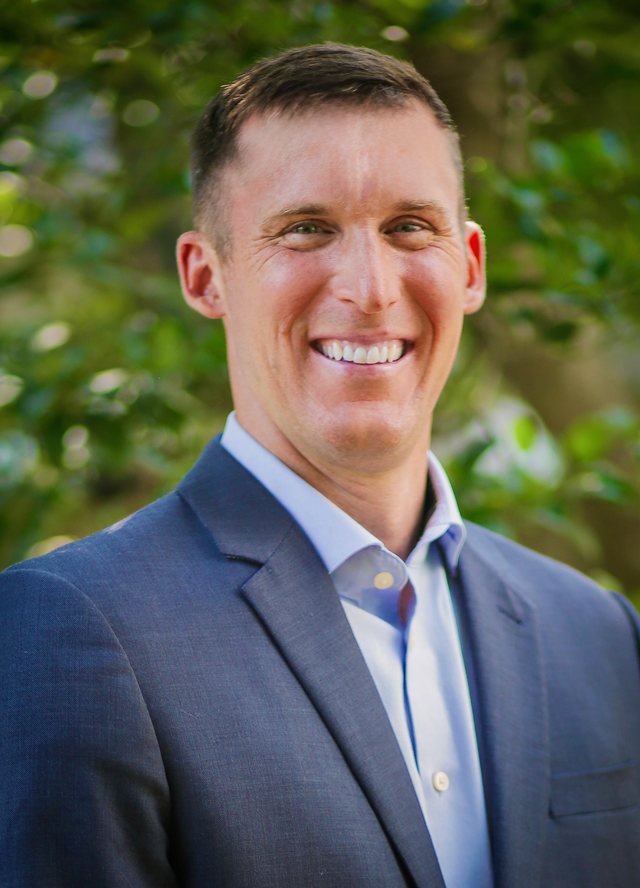
Ed.D., Curriculum & InstructionUniversity of South Carolina
M.A.Ed., Curriculum & InstructionCollege of William & Mary
B.S., PhysicsCollege of William & Mary
Three questions have engaged me for thirty years:
- How do I get better at what I'm doing?
- Why is leadership hard?
- How does learning truly work?
These three questions have driven my personal and professional life, ultimately connecting into a coherent whole.
Getting better has been a major focus for as long as I can remember; this focus comes from a family with generations of coaches and educators. I can vividly remember stories about my grandfather's college basketball coaching career, or my grandmother telling a hilarious story about an elementary school student. My father and mother were constantly giving examples from their own coaching and teaching experiences, creating the expectation of always looking for ways to get better.
With a family of coaches and educators (and marrying an educator!), conversations on leadership were also ever-present. Coaching and teaching are leading – so the chats focused on the ways that leaders were (or not) helping their players and students get better. I absorbed the lessons from these conversations, then began to put these lessons into practice through school leadership roles in student government, clubs, and athletics.
Although learning came relatively easy in my K-12 career, learning in my college career was a brutal reality check. I've always had a love of science and engineering – so I became a physics major. The theoretical physics classes exposed my lack of a learning system, leading to one of the lowest GPAs in our graduating class. In an interesting twist, I performed very well in the physics laboratory classes; the experiments were interesting and relevant, plus fun hands-on work.
In addition to the laboratory classes, I performed physics research throughout college. Researching made me focus on the underlying principles for the experiment: What were we really trying to measure? How can we know that our measurements were correct? What is the true point of the experiment? Working on these questions in many different ways trained me to think through problems with first-principles – creating systems that flowed from the first principles to a coherent solution.
I transitioned from physics into the world of education, finishing a masters in education and becoming a full-time physics educator. I quickly realized that I had much more to learn about curriculum, instruction, and assessment – but more importantly, I needed to go much deeper into how people learn. As I updated my own understanding of each part of education and learning, my physics training kept the focus on how I could make a coherent system for students; the goal was to have each part of the system directly connect to the ways that people learn.
Through my doctoral work, I created a coherent system for students in my physics courses – leading students to a deep understanding and strong performance with the physics concepts. Over time, I realized that the same first-principles and systematic ways of designing for students in physics courses could be extended to learning about learning – creating the idea of a learning system. I also realized that having a learning system deeply embedded into my life answered all three questions, connecting learning with getting better and leadership.
My answer to the question of "How do I get better at what I'm doing?" is a personal learning system. Every topic has sets of knowledge and skills, which a person must learn to participate in the topic. Think about the knowledge and skills for playing soccer: The rules of the game; the technical ability to control the ball; and, the tactical understanding of how to defend and attack as a team. All of these knowledge and skills must be learned, but I deeply believe that the learning can be accelerated through a personal learning system.
In addition, my answer to the question of "Why is leadership hard?" is connected to learning. As a leader, you are running two learning systems at the same time: Your own and one for each of the people in your care. You are trying to figure out what the other person is thinking and feeling, then connect those thoughts and feelings to the situation. Leadership is hard because running two (or more!) learning systems requires a massive amount of cognitive and emotional energy, but the payoff is flourishing for yourself and those in your care.
I believe that every person should have a learning system; my mission is to give life to these ideas, bringing beauty and truth into the world. Understanding how learning works is the foundation for agency, wisdom, and human flourishing – for yourself and every person you lead.